


Common Worldbuilding Mistakes

HelloOoOo everybody!
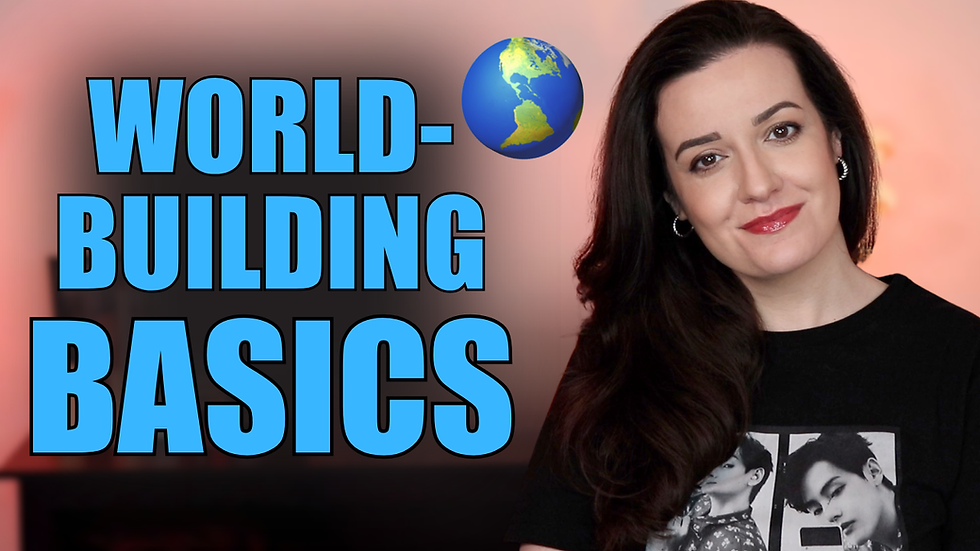
The time has finally come. We’re talking about worldbuilding. This video is dedicated to one of my patrons over on Patreon, Aron Mo. As many of you know, I have released three fantasy novels that take place in a completely different world, so I have a little bit of experience with this. And I actually have a lot to say on this topic, and I’ve already divided it up into two past videos if you prefer to listen instead of read:
Today I'm discussing some of the recurring mistakes writers make when they delve into the pit of despair that is world-building. Before you build the crap out of your fictional society, be mindful of these blunders and try not to duplicate them.
If you haven’t already, don’t forget to also subscribe to my YouTube channel for more writing tips, sarcasm, and of course, more of Princess Butters!

Number 1: Avoid Info Dumps
It's great to figure out the history of your world. You'll need to know the details of its government, its foreign relations, its class system, but your readers don't always need to know this stuff. And they certainly don't need to know it all at once in a massive info dump. A lot of world builders, especially fantasy writers, like to include a multi-page info dump that explains every detail of their world, down to the legal system and imports and exports. Not sure if you realize this, but that shit’s boring.
I'll be the first to say that sometimes exposition is necessary, but only sparingly and in small doses. Most of the world-building process is done so the writer can get a firm grasp of their world, not so the reader can learn about the highly efficient plumbing system beneath the kingdom grounds. Literally no one cares. A little bit of exposition is fine, but for the most part, allow your readers to get to know the world by following your characters as they travel through the world.
You don't need a massive info dump explaining the climate. The reader will understand that it's a cold climate when your character is trudging through snow. You don't need to explain the class system when your character is referring to some people as nobles and some people as peasants—that kind of speaks for itself. Info dumps do you no favors if the reader can simply learn about the world by reading the story itself.
Number 2: Travel Matters
A lot of writers put themselves in shitty situations while world-building because they didn't bother to ask themselves one simple question. Where the hell are your characters going? Maybe your book begins in the Ruby Kingdom. So you think to yourself, “Okay, I'll build the Ruby Kingdom, easy!” Except if your characters travel to the Kingdom of Darkness in chapter three, building a single location that only appears in a couple of chapters isn't exactly sufficient.
Additionally, some writers will spend months or even years building not one or two realms, but entire planets filled with territories, each with its own race, religion, government, society… I could go on. Then, after toiling over all this work, they go to write their story, and the character never leaves their village. Congratulations, you’ve just wasted years of your life that you're never going to get back.
So before you dive into world-building, take a look at the direction of your story. Where is it gonna go? Where are your characters going to go? It's good to have a general idea of the world you're creating, but it's smarter and more time-efficient to focus a majority of your efforts on the exact places that will be predominantly featured in your series.
Number 3: Magic and Superpowers Make a Difference
A long time ago, a new race of magical beings appeared in the world, and nothing happened. Really? Everything just continued as normal? We don't have magic in the real world, so I get not understanding the effects it would have on a society, but I'm sure you can logically assume that something as significant as mystical powers would change shit for a lot of people.
How do you think people would react? Would they be excited? Curious? Terrified? Or all the above? How would religious figures react? What about the government? You need to account for these responses and subsequent changes because life isn't going to continue as normal if suddenly everyone can fly.
Now say your society isn't experiencing superpowers for the first time; say magic has always been a part of this world. This is going to affect stuff too. If people have the power to control the weather, you can't write about crops dying in an unexpected drought, because Farmer John would have made it rain. Am I right?
If your characters can read minds, then you can't rely on a deep dark secret to fuel the plot, because there are no secrets. Your characters can literally see into each other's thoughts. Think about how powers would affect society as well as day-to-day life. Consider not only the reactions people would have to these powers, but how they would implement them into their normal everyday activities.
Number 4: People Are Not a Monolith
It's normal for a country to have one particular government, but it's not normal for every single citizen to support that government. It's normal for a kingdom to have a dominant religion, but it's not normal for every resident to practice it. The real world does not work in absolutes. People have their own unique opinions and perspectives. So while it's possible for most of your world to think a certain way, or carry certain beliefs, there will inevitably be outliers. Even if your government used militant force to enforce societal norms, there will still be people who practice their beliefs in hiding and are willing to die for their cause.
So how do you know if your world building has produced a monolith? Is there one religion or belief system in your kingdom? Or even worse, the entire world? Is there only that one political system, and does everyone follow it, no questions asked? Does every character have a name based on the same language or written in the same style regardless of background? These sorts of things aren't true to life. If your world building is lacking variety, it's lacking realism.
Number 5: Diversity in World Building Is Realistic World Building
A lot of people get bent out of shape about the concept of diversity and fiction, which I honestly find really weird. We all want to see ourselves in stories. What's wrong with that? Why is that so hard to grasp? And usually the people who say, “I don't care if I see myself in books!” are the people who already have a ton of representation. So of course you don't care. You don't know what it feels like to be treated as if you don't exist.
So here's the deal, folks: if you want to tell realistic stories that appeal to a wide audience, diversity is a must. Remember, society isn't a monolith. It's not realistic that your characters all look the same, have the same sexuality, or the same physical and mental capabilities. And no, your book is not diverse just because you included humans and fairies.
Additionally, if you nix diversity in your world-building, you don't get to act like your hands are tied. “I really wanted to include a more diverse cast. It just turns out that this particular kingdom is a Caucasian Kingdom.” What do you mean “it turns out?” You are in complete control of your world-building. You chose to make your kingdom like this.
Why is that? If this question makes you defensive, then you've learned something about yourself. If you're making excuses to avoid writing people with a different skin color or body type or sexual orientation than you, then it might be time to do some soul searching and figure out why something as simple as melanin and hormones makes you uncomfortable.
So that's all I've got for you today!

World building is a difficult process. There's lots of room for error, and these mistakes in particular are super common, so don't make them.
A huge thank you to Aron Mo for requesting this topic. If you'd like the chance to have a video dedicated to you or if you want access to tons of other rewards, check me out on Patreon. I've covered the sort of things you should nail down during the world-building process in this video here, so give it a look.
Follow Me!
Buy My Books!
CHECK OUT THE SAVIOR’S CHAMPION:
CHECK OUT THE SAVIOR'S SISTER:


As someone who’s built a few fictional universes for car games free, I often find integrating lore with gameplay to be tricky. What strategies do you recommend for balancing rich storytelling while keeping the action thrilling?